

When I carefully carved the first permanent dent on the “smith’s shop” plate with a virtual chisel in the fifth morning of the digital world, my fingertips seemed to feel the feeling of wood fiber breaking. This digital action, which should have been silent, aroused a clear and firm echo in my heart. I realized that what I am carving now is not only a game building, but also a history that belongs only to me and cannot be traced back. _Charterstone_ told me in the most gentle way that the weight of rebuilding the “heritage” in the digital field does not rely on data replication, but on making every click a solemn authorization ceremony.
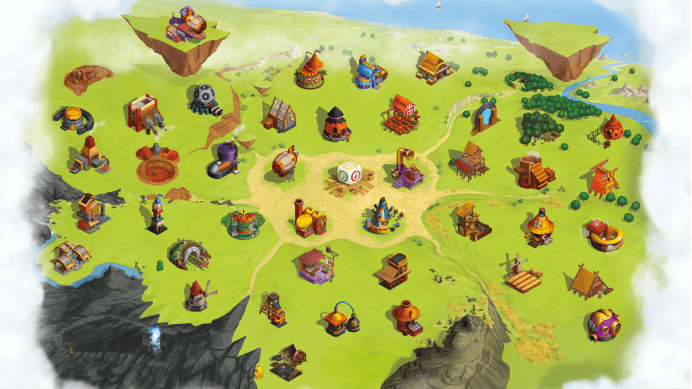
Our journey begins with a blank place shrouded in mist, six manors waiting to be awakened. The core of the game, the fascinating and awe-inspiring “heritage mechanism” derived from physical board games, was brought to the screen without reservation. Here, open a mysterious wooden box, unlock a new villager, and even put a permanent sticker on the rule book — these physical board games with the sound of tearing and pulling and sticking are transformed into irreplaceable digital events. I clicked on a sealed scroll, and it was accompanied by an ancient parchment sound effect, permanently adding a page to the central narrative book; I made a key choice, and the tone of the whole land may change from bright to slightly dark. The game does not hide its purpose: what it invites you to participate in is not a game of chess, but a history of civilization that lasts for twelve “generations” and requires you to write laws and memories for the world with your own hands.
What makes me most wonderful is how the game deals with the disappearance and reappearance of “physicality”. The “heritage” charm of physical board games partly comes from the taboo pleasure and reluctance of destroying, smearing and transforming by hand. The digital version can’t provide a real touch, but it gives me a “creator” vision. When I unlock the “Archive” function, an independent space-time interface unfolds. The choices of all my generations, all the secrets that have been revealed, and all the map plates that have been permanently changed by me are clearly displayed in a museum collection-like way. I can no longer touch the farmland of the first generation, but I can look through the complete layer record of it from barren to fertile, and finally covered by towns at any time. Memory no longer depends on faded ink or worn card edges, but is solidified into a sophisticated, clear and only digital epic that belongs to me. This sense of eternity of being properly kept may be an affectionate and powerful compensation in addition to the regretful “one-time” aesthetics of physical games.
As the game progresses, my town gradually grows from a resource collection point to a life with a unique temperament. Because I favored trade in the early days, a commercial road running through the map automatically became eye-catching; because I once pardoned a “thief” NPC, an underground black market was quietly formed in later generations. There is no preset “best path” in the game. It just weaves my wise or reckless choices into the basic code of the world again and again. In the eighth generation, when I was facing a complex resource crisis, I found myself looking back at the trade terms that were now harsh because of greed three generations ago, and my history has become the opponent I need to interpret and reconcile with most. This experience of playing with the “past self” is a deep narrative that no single game can give.
When the sunset afterglow of the twelfth generation finally sprinkled on my town square, all the secrets were revealed, and the final score was settled. But I didn’t quit. I entered the “Eternal Mode” — a brand-new sandbox composed of all the rules and components created by my own hands. Here, I can invite others to experience my unique world, and I am like an old mayor, watching the visitors live, trade and fight under the law I have formulated. At this moment, I completely changed from a player to an author and guardian.
After closing _Charterstone_ for a long time, the boxes of physical “heritage” board games on my bookshelf are still lying quietly. Their stickers have been full, the cards have been torn open, and the story is over. But the world on the screen feels more “real”, because it retains the traces of my every breath and heartbeat intact and vividly. It made me understand that the real inheritance does not lie in whether the medium is wood or pixels, but in whether the space faithfully and respectfully collects our choices and turns them into unshakable cornerstones for the future. After all, what we are eager to leave in the game is never the score of victory, but a series of indelible coordinates that we have existed so seriously.