

When the body was found, the train was driving into the tunnel. The lights flashed in response to the scene, and the darkness swallowed up all the outlines. The housekeeper’s scream was stuck in mid-air, like a broken opening whistle for a play.
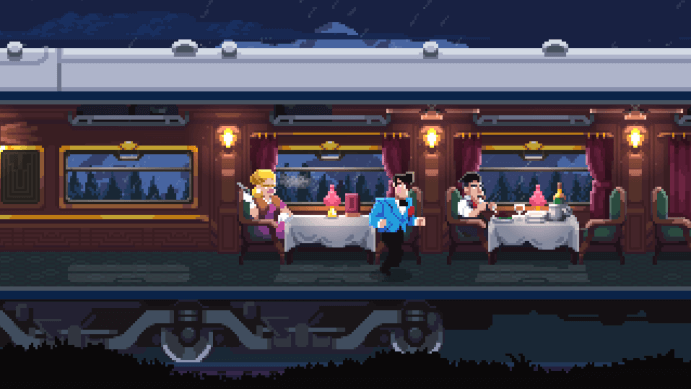
I’m the Detective Lorton at the moment, and the cigar between my fingers is still burning. But a minute ago, I was still a financier Walsh, with the temperature of the mahogany table and the sudden coldness of the temples. The dizziness of the perspective switch has not dissipated — now I look at the position where “I” fell with the eyes of the suspect, and scan the scene with the detective’s mind: the silver tableware is too neatly arranged, a pen rolls on the edge of the carpet, and unbroken bubbles hang in the champagne glass.
The blizzard locked us all in this moving metal coffin. The rhythm of the railway has become the only unit of time. Every time I pass through a tunnel, a strange memory forcibly enters my consciousness. I suddenly realized that there was a blackmail letter hidden in the lady’s handbag, because I was still touching the fire lacquer seal with her fingers just now; I was familiar with the loosening of the third button of the waiter’s uniform, because I was lowering my head to adjust it half an hour ago. All the passengers used to be me, and all the eyes used to be my eyes.
The evidence is scattered all over the train. I smelled gunpowder between the pages in the reading room and felt the dents on the shell at the bottom of the ice bucket in the kitchen. But these fragments refuse to be assembled into a complete picture — unless I stand in three positions at the same time and think: the murderer’s motive, the detective’s reasoning, and the intuition of an outsider who happened to hear the sound of the door closing. The game does not provide God’s perspective, but only seven pairs of pupils and their overlapping reflections on the garage glass.
The key to solving puzzles is often outside of time. When the ticking sound of the pocket watch was amplified by the wind and snow, I learned to capture the contradictory moment in the flashback of memory: a witness claimed that he was in the bar at that time, but his memory had the unique shaking frequency of the sleeper car; the other insisted on hearing the gunshot, but the auditory memory was mixed with the clear sound of the porcelain collision of the dining car. Everyone is telling the truth, and everyone is also unconsciously fictional.
At the final time of disclosure, the train just drove out of the tunnel. At the moment when the white light poured into the car window, all the scattered perspectives suddenly closed. I stood at the junction of the carriage and suddenly saw the whole picture of the play — not as a detective, not as a murderer, but as the train itself, the lifeline of the dark and lonely steel in the snowstorm.
At the end of the game, the traffic in the real world outside the window is sliding silently. I blinked, as if I had just woken up from seven games of life at the same time. _Loco Motive_ did not reshape the Blizzard Villa. It just gently reminded that the so-called truth is never the patent of a single perspective, but the dazzling and honest white light that collides when all eyes have to meet at a certain moment.