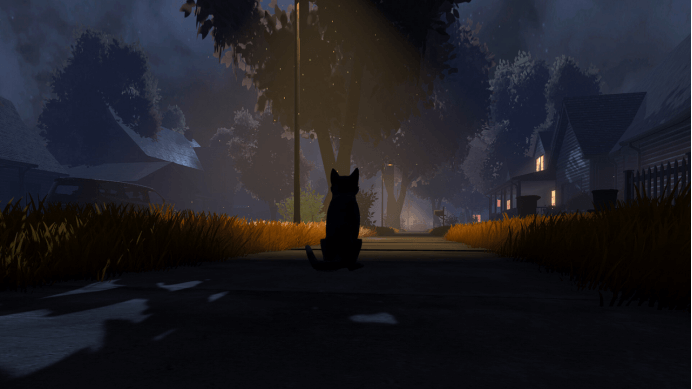


The window of my apartment is always covered with a layer of water mist. That’s not the real fog, but the fingerprints left on the glass by the temperature difference. Outside the window, Nivalis is breathing at a speed of 300 kilometers per hour.
At 4:17 a.m., I heard the drain humming. It was an old-fashioned synthetic wave melody, floating up from a ventilation well downstairs on the thirty-second floor, filtered by rusty metal, and turned into a wet and broken melody. I pushed open the window, and the neon light particles poured in with the airflow, leaving a cold touch on the back of my hand. The whole city is breathing — the advertising airship has turned off 70% of the holographic projection, the suspended traffic has been reduced to night mode, and even the vending machine at the corner of the alley has dimmed the display. Only the red lanterns of the ramen stall are still awake, pulsating in the humid air, like the heart of the city that has never been dormant.
I rarely go out during the day. The sunlight of Nivalis is artificial, and only a soft grayish tone is left after passing through the atmospheric filter layer. I like to open all the sensor interfaces at this moment to see how the data describes the outline of the city. The temperature map shows that the average temperature of Koi Gate District block is 2.3 degrees lower than that of the financial district, and an abnormal blue vacuum suddenly appeared on the heat map of traffic flow — it was later known that two garbage trucks were tailgating, resulting in the temporary closure of three vertical trunk roads. These data fluctuated like the nerve signals of the city, and I inadvertently became a person who read brain waves.
I did an experiment last night. Follow the No. 7 aerial walk all the way to the end, where there is an abandoned meteorological observatory. There is a thin dust on the console, but the screen is still on, looping the weather files of 30 years ago: real rain, real fog, real wind speed data. I sat and watched for a long time, until at some point, all the data suddenly became real-time readings. The outdoor temperature is 19.7 degrees, the relative humidity is 88%, and the wind speed is 0.4 meters per second — exactly the same as what is shown on my sensor, but the parameters of the neon refractive index are missing. It turns out that the city has been breathing in parallel in two time dimensions: one is the breathing at this moment, data-based, accurate to two decimal places; the other is the breathing in memory, with rust and the smell of circuit board burning, which belongs to the previous era.
What fascinates me most is those interface moments that are not noticed. For example, the 0.5-second delay of the automatic door opening in front of you, and the sound of mechanical friction in the brief darkness. For example, when the elevator descends from the 200th floor, the subtle pressure changes felt by the eardrum. For example, before each rainstorm warning is issued, the smell of ozone metal will appear in the air thirty minutes in advance — which is a side effect of the activation of the ionosphere stabilizer. These moments are like punctuation marks in the narrative, which do not carry specific information, but determine the rhythm of reading.
When I woke up this morning, I found that a new branch had grown on the synthetic moss on the window sill. Its growth procedure should have followed the preset algorithm, but now the angle of the leaf curl is obviously affected by the flickering frequency of the billboard outside the window. I called up the light record of the past 72 hours and found that whenever the Qilin Holo-Ad opened its eyes, the photosensitive cells of the moss would fluctuate abnormally. Even the smallest life is resonating with the breath of the city.
In the evening, I stood on the edge of the rooftop and watched how the night color penetrated the buildings layer by layer. The first thing that lights up is always the blue guide light of the medical center, then the colorful neon lights of the commercial street, and finally the scattered warm yellow windows in the residential buildings. This process is repeated every night, but there is always a subtle difference in the order. Today, the window on the 72nd floor lit up seventeen minutes earlier than usual, and tomorrow there may be another window that will not light up for a longer time. The narrative of _Nivalis_ is hidden in these differences — not a grand legend, but the asynchronous resonance of millions of independent moments.
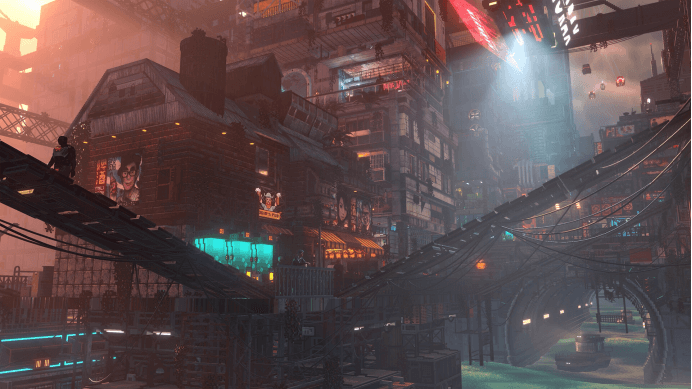
Now it’s raining outside the window again. In other words, the meteorological system began to simulate rainfall. I turned off all the lights and listened to the sound of water droplets hitting the glass in the dark. The rhythm is inexplicably similar to the song hummed by the pipe last night. I suddenly realized that the city had never tried to tell me a complete story. It just constantly provides new ways of breathing: the breath of data flow, the breath of neon, the breath of memory, and the silent breath that I am sitting in the dark at this moment, shared with tens of thousands of people who are also awake.
The real interaction is never to choose the branch of the plot, but to learn to adjust the frequency of one’s breathing to match the exhalation and inhalation of a huge existence. And when this happens at the same time, all the walls will disappear — whether it is the glass, the data, or the narrative itself.